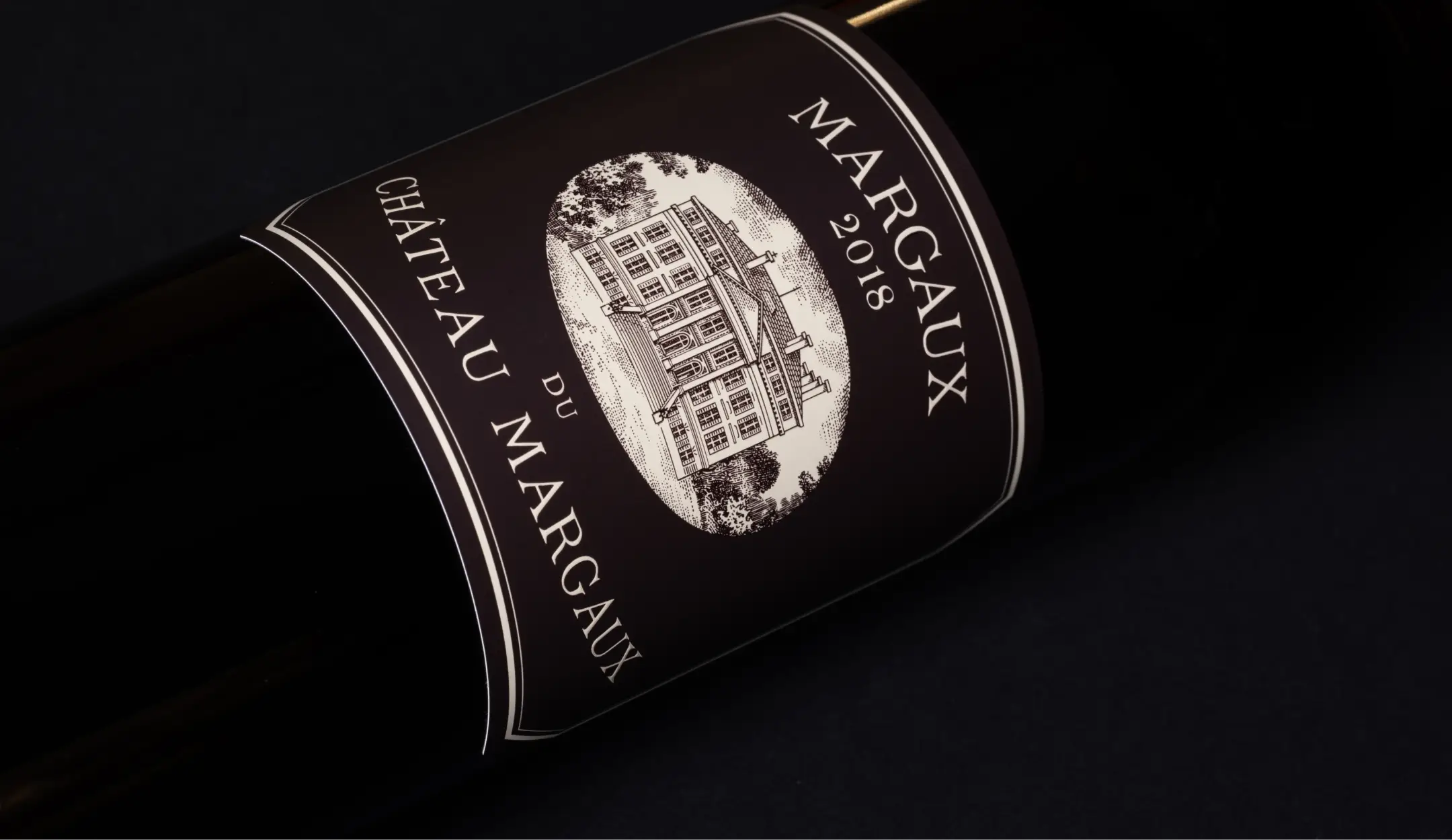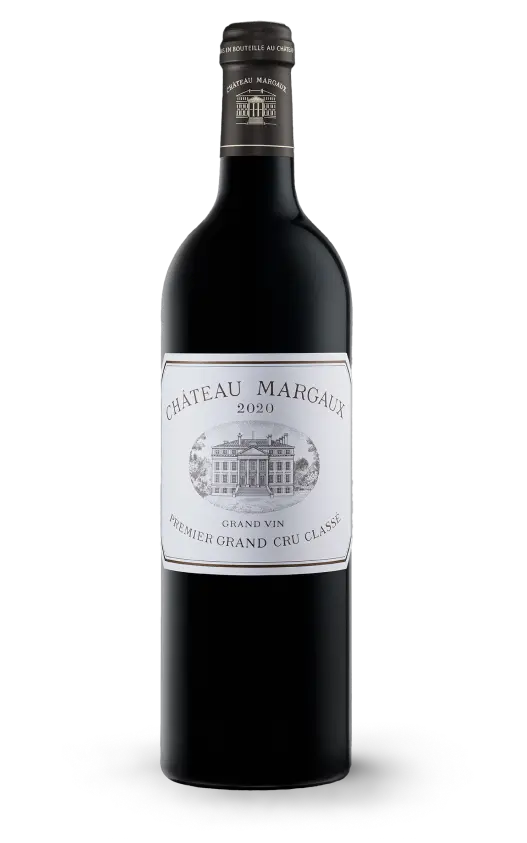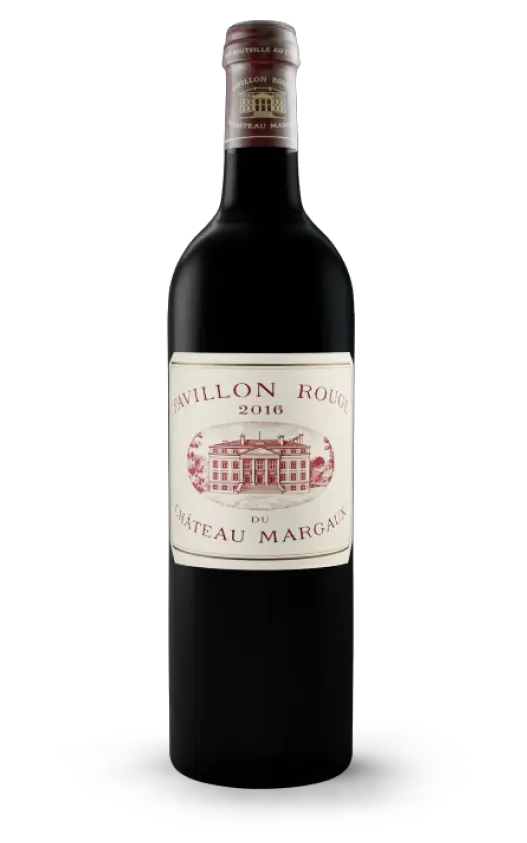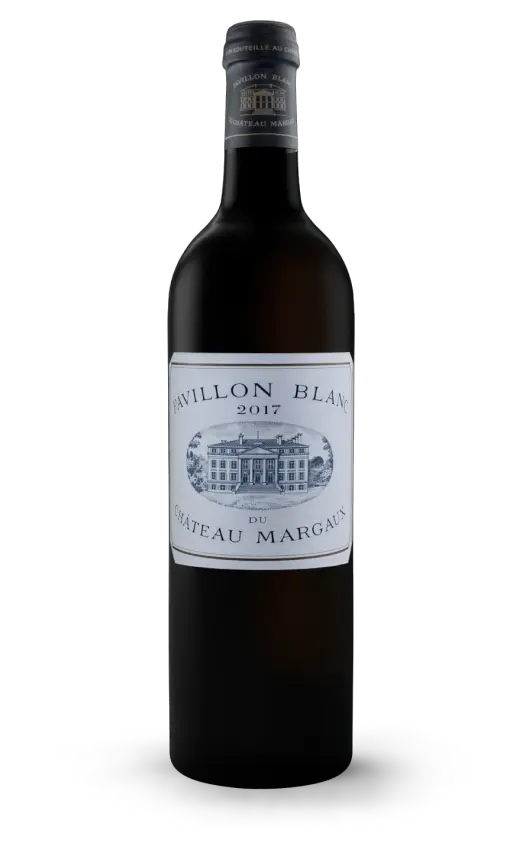

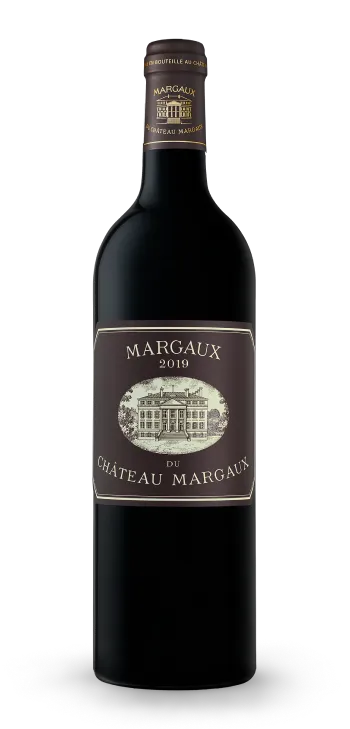
Margaux du Château Margaux
Excellence has always been the guiding principle at Château Margaux in the making of its wines. As early as the 17th century, this pursuit of perfection led to the creation of a second wine, first named “Château - Margaux 2me vin”, before becoming Pavillon Rouge du Château Margaux in 1906.
Over time, the pursuit of precision intensified, making the selection increasingly rigorous. Year after year, this heightened attention to detail improved the quality of Pavillon Rouge and, by extension, that of a third wine, which was initially sold in bulk.
The exceptional 2009 vintage marked a turning point. Instead of being sold in bulk, this third wine was aged in barrels with the same care as Pavillon Rouge before being bottled.
Since then, the selection process has been further refined.
Today, the third wine also undergoes a dedicated selection. Volumes not retained for bottling are now grouped into a fourth selection, forming the estate’s fourth wine, which is sold exclusively in bulk.
History and winemaking
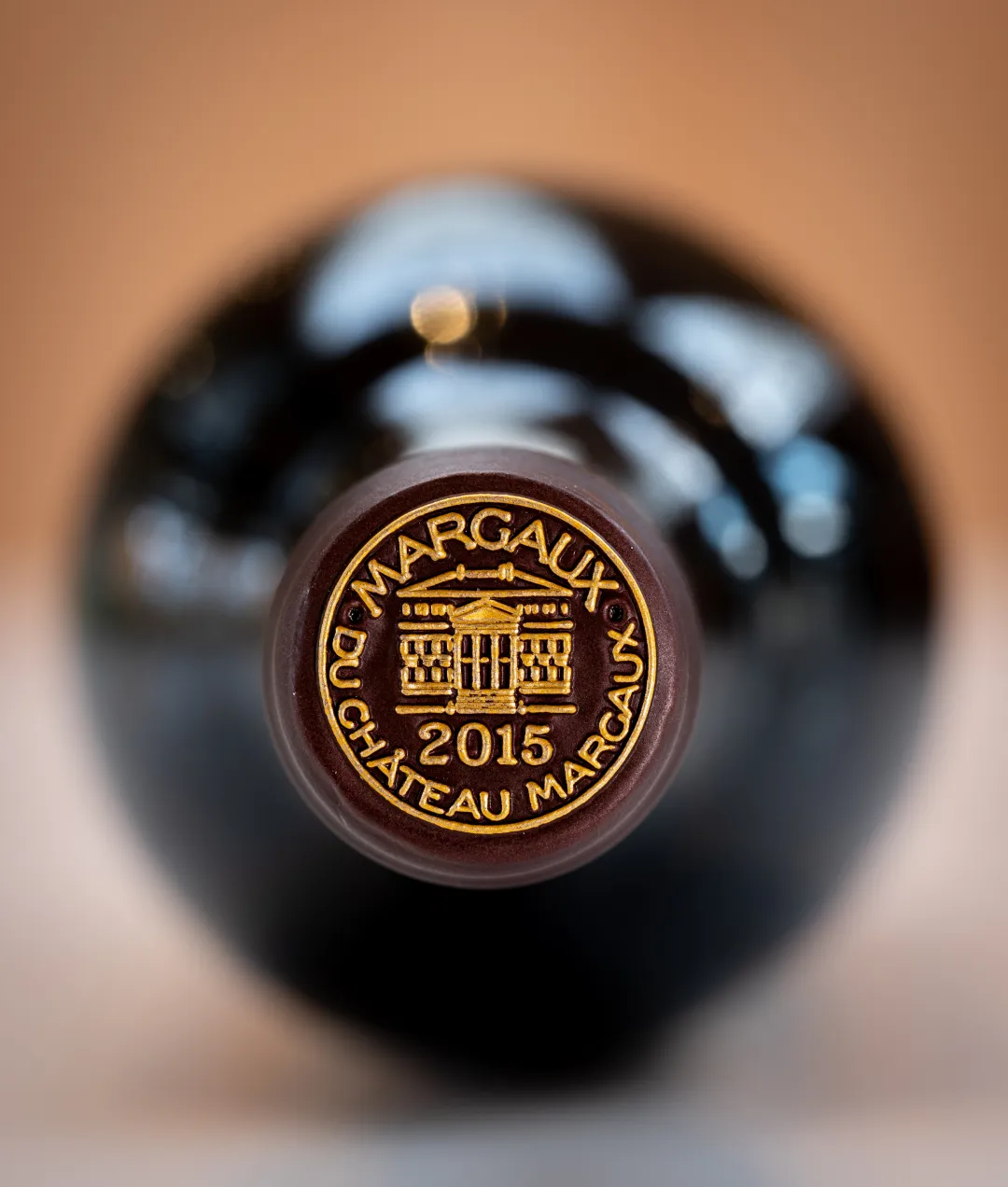
Thus was born Margaux du Château Margaux, the estate’s third red wine, made exclusively from the estate's own vineyards. More approachable in style, it offers wine lovers and new generations an introduction to the world of Château Margaux, while faithfully reflecting the elegance and finesse of its terroir. With limited production, Margaux du Château Margaux is available only at a limited number of restaurants and from a selection of specialist wine merchants.
History and winemaking
Thus was born Margaux du Château Margaux, the estate’s third red wine, made exclusively from the estate's own vineyards. More approachable in style, it offers wine lovers and new generations an introduction to the world of Château Margaux, while faithfully reflecting the elegance and finesse of its terroir. With limited production, Margaux du Château Margaux is available only at a limited number of restaurants and from a selection of specialist wine merchants.
History and winemaking
Thus was born Margaux du Château Margaux, the estate’s third red wine, made exclusively from the estate's own vineyards. More approachable in style, it offers wine lovers and new generations an introduction to the world of Château Margaux, while faithfully reflecting the elegance and finesse of its terroir. With limited production, Margaux du Château Margaux is available only at a limited number of restaurants and from a selection of specialist wine merchants.
Blending and ageing
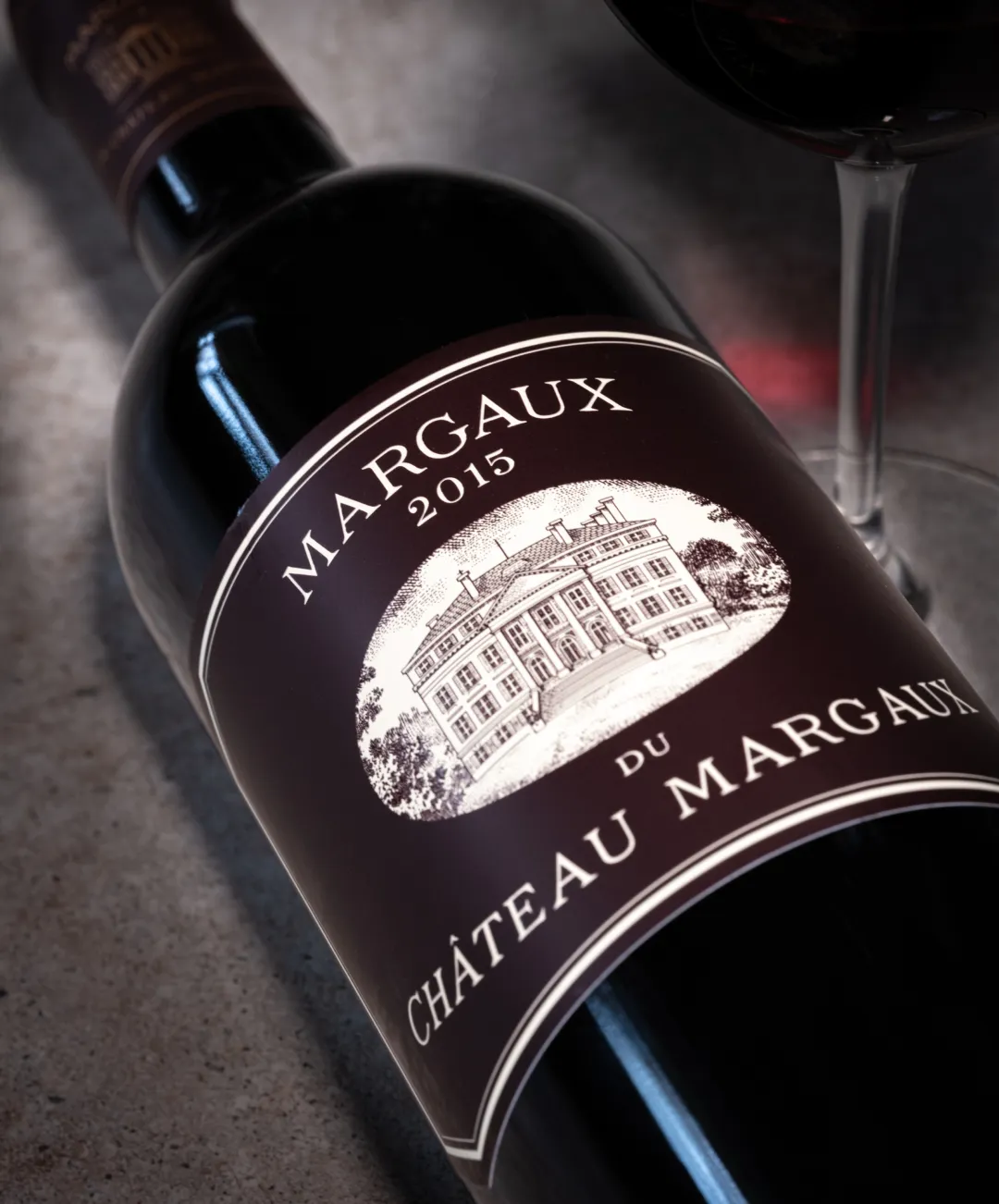
Margaux du Château Margaux is aged for around 18 months, with approximately 25% aged in new French oak barrels. Production varies depending on the vintage, averaging around 60,000 bottles per year.
Blending and ageing
Margaux du Château Margaux is aged for around 18 months, with approximately 25% aged in new French oak barrels. Production varies depending on the vintage, averaging around 60,000 bottles per year.
Blending and ageing
Margaux du Château Margaux is aged for around 18 months, with approximately 25% aged in new French oak barrels. Production varies depending on the vintage, averaging around 60,000 bottles per year.
Through the vintages
Rediscover Margaux du Château Margaux through its vintages
Select your year
Margaux du Château Margaux
2019

We have decided to release Margaux du Château Margaux 2019 starting in spring 2025, as this wine, during a team tasting, displayed such immediate charm that it won us all over.
The bouquet, floral, fruity, and subtly spiced, is already expressive and complex, with perfectly integrated oak.
On the palate, the texture is smooth and silky, with such well-rounded tannins that one almost forgets the concentration typical of this great vintage.
The finish is long and aromatic, reflecting the wine’s overall character: all finesse and delicacy.
It certainly has a brilliant future, but it is already hard to resist today... (October 2025)
60% cabernet sauvignon, 38% merlot, 1% cabernet franc, 1% petit verdot
Climate
Globally, 2019 was the warmest year on record. In France, the average temperature was 13.7°C, 1.1°C to 1.2°C higher than usual.
In Margaux, the winter of 2019 was mild at 1 to 2 degrees above the 30-year averages, with limited rain (30 mm less than the 30-year averages) and only three days of frost. Under these conditions, the date of bud-break ranged from March 29th to April 4th.
Spring was mild and temperatures were near-normal for the season, with abundant rainfall at the end of April and again between June 5th and June 18th. Flowering occurred between the 1st and the 9th of June and went relatively well. Only some older parcels of Merlot showed some signs of coulure. The rain, which risked causing occasional outbreaks of mildew, had no sanitary impact and the vineyards remained in a very good state throughout the year.
The summer stood in sharp contrast to the rainy spring. Anticyclonic conditions prevailed and only 64 mm of rain fell between June 21st and September 21st. However, the summer of 2019 will be best remembered for two heatwaves at the end of June and then from July 22nd to 24th when the temperature reached 39.9°C in Margaux!
The red grape harvest began on September 18th in ideal conditions, and the Merlot grapes were perfectly ripe and concentrated when picked. A weather disturbance between September 22nd and the 29th did not affect the health of the grapes and allowed them to ripen more slowly under conditions that were less aggressive for the vines, better preserving the acidity levels, with ultimately not too high levels of alcohol. The grapes picked between the end of September and the beginning of October benefited from the concentration developed after veraison (August 5th to the 10th), without being significantly affected by low slight dilution from the rain.
The harvest ended on October the 10th.
Margaux du Château Margaux
2018

We decided to release the 2018 Margaux du Château Margaux as early as autumn 2024, as it is exceptionally opulent, generous on the palate, and already highly approachable.
From the first impression on the nose, we're seduced by its fragrance of ripe, spicy red fruits, with the oak already perfectly integrated. Then on the palate, the wine has an impressive, silky and unctuous texture.
The quality of the tannins is remarkable, as is the length on the palate, being both soft and quite fresh, despite the summer’s high temperatures.
In the end, the only disappointment is the low volume produced, given the limited yields and drastic selection during blending. In fact, over 20% of the production was downgraded into a fourth selection, sold in bulk. (October 2025)
83% cabernet sauvignon, 15% merlot, 2% petit verdot
Climate
The warmest year since the beginning of the 20th century, temperatures in 2018 were 3.24°F above the national average. In Margaux, the year began with a relatively mild winter with below-normal temperatures and occasional frosts in February which had no impact on our vines. The rest of the year was hot, sometimes very hot, compared with seasonal averages, marked by record-breaking temperatures in the last ten days of June and the first ten days of August, more than 7.2°F above the 30-year average.
Rainfall in the first half of the year was heavy with nearly 25 inches in Margaux between January 1st and July 10th, making growing conditions challenging. Each rainy day made a good vintage less likely. But dry and warm summer conditions eventually reached our region and remained until the end of the harvest. Rainfall was very low between mid-July and late September at 2 inches. This rainfall pattern is reminiscent of 2009.
Under these conditions, budbreak was relatively late between the 4th and the 10th of April. The vines flowered between the 25th and the 28th of May and, despite fairly poor conditions, we did not note, even in the relatively sensitive Merlot plots, poor or failed fruit-set. The greatest challenge was mildew which this year led to slightly lower yields than hoped for after the fruit-set.
The white grapes were harvested the week of August 27th. The red harvest took place from September 17th to October13th in ideal conditions. Again this year, we were able to choose the best time to harvest our grapes – no Botrytis symptoms, mild weather, ripening conditions sufficiently spread between the earliest Merlots and latest Cabernets – and we had time to take the necessary care with each wine-making vat. Nearly a hundred different batches were converted into wine this year, demonstrating our continued efforts for better and more precise selections.
Margaux du Château Margaux
2017

In 2023 we have decided to start selling the Margaux du Château Margaux 2017. This is a delicious, charming wine that today is more ready to drink than the 2016 vintage.
This wine is best described by its softness, freshness and balance. The nose offers notes of flowers and red fruit, and on the palate, the wine is both concentrated and silky, with a lovely richness that balances the tannic structure. This wine is a pleasure to drink now, even though it is still very young and clearly destined for a bright future. (October 2025)
Climate
After a relatively dry 2016, the first months of 2017 brought the necessary precipitation to keep the water table balanced. Winter temperatures weren’t particularly cold. The vines budded around April 4th, but we weren’t wary enough of the spring-like temperatures and a frost on the nights of April 27th and 28th served as a reminder that, above all, winegrowers are dependent on nature. The choice location of our vineyard plots allowed us to limit frost damage: only 10% of our red vines were affected.
In the whole growth cycle, only the last week of June saw heavy rainfall. The vines had already flowered between May 25th and 30th in the most favorable conditions for efficient, homogeneous pollination. Summer 2017 more or less resembled summer 2016: warm and very dry through July and August. Light rainfall in early September was the only thing that disrupted a rare opportunity to produce a third great vintage after 2015 and 2016; we had just harvested our white grapes when heavy precipitation dashed our hopes of a truly standout year.
We then had to make a crucial decision: to harvest quickly grapes that were not yet ripe enough for fear that Botrytis would ruin them, or wait for the sun’s return and harvest riper, more concentrated grapes later in September. In keeping with our high standards of quality and reassured by optimistic weather forecasts, we chose the latter and harvested the reds between September 12th and October 3rd in exceptionally fine weather conditions.
Margaux du Château Margaux
2015
Margaux du Château Margaux 2015 is the result of the most rigorous selection ever made on our 3rd wine: indeed, almost a quarter of the production was relegated to a 4th wine sold in bulk.
Thanks to this rigorous selection, we may well have today the most charming and open Margaux du Château Margaux we have ever produced.
The already expressive nose is delicately smoky with floral and red fruit notes, and precedes a silky palate full of freshness, elegance and delicacy.
This wine is so delicious that it would be easy to overlook the concentration of this great vintage! Above all, the wine expresses remarkable length and has a tannic richness that is eclipsed only by its smoothness. It is already difficult to resist today, even though we know it will continue to improve in the years ahead. (October 2025)
Climate
Winter, which was appreciably colder than those of the previous years, caused late, but perfectly regular blossoming. Dry and sunny weather in the spring made for optimal conditions, so flowering took place very quickly and homogenously. This hot, dry weather persisted throughout the months of June and July, to a point where we were afraid there could be water stress, at least in the most sensitive plots. Fortunately a little rain in August arrived just in time to ensure a quick and regular colour-change. The drought, which arrived again in September, together with very warm days and cool nights, enabled the grapes to balance their richness in sugar with good acidity, to render their tannins more silky and to make their aromatic potential more complex.
The harvest of the reds took place from September 18th to October 6th. The small size of the grapes and their thicker skins indicated a very high concentration of tannins. The 2015 weather conditions are, in fact, the feature of very great vintages, like 2005, 2009 and 2010.
Margaux du Château Margaux
2014
Margaux du Château Margaux 2014 has benefited enormously from the outstanding selection made for this vintage. The Pavillon Rouge and Château Margaux blends make up just 60% of the harvest in 2014 which allowed the Margaux du Château Margaux to be enhanced by plots previously used for Pavillon Rouge. The result is one of the finest vintages of this wine to date, composed in equal parts of cabernet sauvignon (49%), and merlot (49%) with a small percentage of petit verdot.
This wine has an immediate freshness, charm and elegance on the palate. The delicate, floral and fruity nose gives way to a gentle and smooth mouthfeel and finishes on a tighter note—a reminder that this is a concentrated wine with a bright future ahead of it. To be enjoyed without rushing. (October 2025)
Climate
After a very wet and mild winter, without any significant cold spells, spring was « normal »: May was rather cool and June was quite warm, so flowering happened on the usual dates, and under very favourable conditions; it was therefore very quick and homogenous, contrary to the previous year.
July didn’t bring us any great surprises, but August was particularly cool, without doubt one of the coldest we have seen in recent times. These low temperatures made it difficult for the grapes to change colour, which took a long time. Fortunately it didn’t rain much, but in neither July nor August did we have a really dry spell. As it often happens in Bordeaux, at the end of August anything was still possible; a prospect of a good vintage as well as of a mediocre one… The really fine sunny weather of September brought us exactly what we were hoping for: the heat and drought enabled the grapes to ripen perfectly, and the harvest to take place under ideal conditions. The complete opposite to what happened in 2013… The white harvest took place from the 15th to the 19th of September, and the red harvest from the 29th of September to the 10th of October.
Margaux du Château Margaux
2013
While it is relatively easy, on a great terroir and in a fine vintage, to produce an excellent third wine, the exercise becomes more delicate in certain years when not all plots reach full maturity.
How then, in a vintage such as 2013, can we maintain our commitment to excellence? Indeed, some late plots of cabernet or merlot, affected by “millerandage”, a condition that produces very small berries, have not always met our expectations.
With this objective in mind, we carried out the blends of the vintage. We decided to set aside some very fine lots of Pavillon Rouge, which went to “support” the Margaux du Château Margaux, while nearly a quarter of the production was downgraded to a fourth selection. We thought that the Margaux du Château Margaux would be blended from these downgraded lots, when in fact it is completely composed of wines that used to go into the Pavillon Rouge, which left the quantity sold in bulk unchanged.
Therefore Margaux du Château Margaux 2013 benefits from the extreme selection carried out on the Pavillon Rouge (which only represents 21% of the harvest), and from the removal of the least successful plots (all of which went into the fourth selection sold in bulk).
The merlot makes up only 12% of the blend, putting the emphasis on the cabernet sauvignon which was the main success of the vintage (88% of the whole).
It is just like all the best wines of the vintage, fresh, perfumed, very soft on the palate, and with no hint of harshness or aggression. It is a charming wine that appeals to delicate foods and although it does not have the same ageing potential as the other vintages, will nevertheless offer immediate pleasure to those who taste it. It is perfect for drinking today. (Octobre 2025)
Climate
The particularly cool temperatures at the end of winter and into spring delayed the shooting and then the flowering by a good ten days compared to the average. And as it also rained a lot during this period, the flowering was slow and the formation of the grapes difficult which caused a generalised “millerandage” and a bad problem of “coulure” - falling of underdeveloped fruit - in the Merlots. This latter phenomenon turned out to be more moderate for the Cabernets. Straightaway, we knew that the 2013 vintage wouldn’t be plentiful…
Fortunately, the summer drought enabled the grapes to catch up some of their lateness: at the moment of changing colour, we didn’t find the same heterogeneity as at the moment of flowering. It is also possible that their low quantity accentuated the catching up. At the beginning of September hope was growing for a harvest, certainly small, but that seemed to be ripening under excellent conditions.
September was paradoxical, relatively dry, but damp at the same time. Frequent small bursts of rain, in fact, maintained a raised ambient humidity without causing too much precipitation. So there was everything to play for until the end of the month when a sudden development of Botrytis led us to a quick start of the harvest ; in the end, the grapes would lose just a few days’ ripening, enough to dash the hopes of a great vintage, not enough to take away all its promises.
The harvest of the whites took place from the 19th to the 27th of September, and that of the reds, from the 30th of September to the 11th of October.
Margaux du Château Margaux
2012

Margaux du Château Margaux 2012 is a very dense wine that blossoms after a few moments, revealing complex aromas of spice, black fruit and flowers. After this very pure nose, it is fresh and smooth on the palate, with balance and finesse. Although the tightly-knit tannins are present, their silkiness is so remarkable that they go unnoticed, even in such a young wine. It does not have the depth and complexity of the Pavillon Rouge, but this wine is no less a reflection of our terroir, which has the ability to produce wines that combine softness and power, freshness and maturity; wines that are delicious to drink young, but that can be kept for several decades. It can be enjoyed now, with no rush. (October 2025)
Climate
2012 marked the return of a great climatic classicism: a cold winter, especially in February, followed by a very wet spring, then a very dry summer before a return to rainy weather as from September 20th.
The heavy rain which lasted until July 15th, created very favourable conditions for the development of mildew. However this year we intensified our organic programme with great success: not only have we not used any insecticide on the estate for 10 years, but in 2012 we only used one chemical treatment, as opposed to the usual 7 or 8 on the great wine plots. We’re almost there…
From July 15th onwards, the weather was dry and moderately warm but punctuated by a few very hot days. Such conditions are typical of great Bordeaux classic vintages: they allow for the simultaneous ripening and concentration of the grapes. Only the less good terroirs and young vines suffered from the sudden transition from a very wet spring to a very dry summer.
The weather changed again from the first day of autumn: the moderate rains, which fell regularly from September 20th onwards, arrived too late to greatly upset the ripening or health of the grapes, but probably prevented, by a few days, 2012 from being the great vintage it should have been.
The harvest of the whites took place between the 10th and the 14th September, while the harvest of the reds was carried out between the 25th September and the 16th October, just before the weather really deteriorated...
Margaux du Château Margaux
2011

This vintage benefited from ideal weather conditions. Consequently, the vast majority of our vines reached perfect ripeness, resulting not only in an excellent Grand Vin and Pavillon Rouge but also in a very fine Margaux du Château Margaux.
These wines are the fruit of a rigorous selection process. Indeed, all grapes from the youngest vines, which suffered considerably from the summer drought, were downgraded to a fourth selection sold in bulk.
This wine is remarkably concentrated—one of the benefits of the prolonged drought—and needed time for its imposing tannic structure to round out and soften.
With a lovely ruby colour, this wine is imbued with harmonious oak notes and is floral and fruity on the nose. Composed almost equally of cabernet sauvignon (55%) and merlot (45%), it is dense, powerful and lingering on the palate, yet unfailingly balanced, thanks to its remarkable freshness. It is delicious today, even if it will continue to improve over the next few years. (October 2025)
Climate
The wine-growing year started with a virtually summery climate, the months of April and May being a lot hotter and drier than normal. The start-up and growth of the vines was, therefore, very quick and flowering was particularly early. Following that, the months of June, July and August were rather cool, but not wet enough, especially at Margaux, to really change the drought status of the vineyard, a characteristic of the vintage. The 26th and 27th of June were hotter than we had ever seen: numerous bunches of grapes, ready to ripen, taking into account the precocity of the vintage, were subjected to intense heat which caused some damage, particularly in the not very vigorous cabernet sauvignon parcels. The dryness of the vineyard after three months of drought probably amplified this phenomenon, of which the consequences remain generally limited. The harvest, which started on the 25th August for the whites, and the 5th September for the reds, benefited from generally hot and dry weather, which allowed plenty of time for the various sorting operations made necessary by the problems of intense heat. Our only disappointment is the quantity: with a yield of 29hl/ha, the 2011 vintage is the smallest harvest for 20 years!
Margaux du Château Margaux
2010
Amazing 2010! We thought we had reached the summit in 2009, and here it is, equalled in 2010. Moreover, Margaux du Château Margaux benefited from a selection that was unknown in 2009: the less successful lots were put together into a fourth wine sold in bulk.
This Margaux du Château Margaux is a true reflection of the extraordinary quality of the 2010 vintage: complex and deep on the nose, very pure, particularly subtle; on the palate, it is dense, rich, tight, very long and fine. The finish is at once soft, fresh and very aromatic. This wine is already very pleasant to drink but far from having reached its peak. (February 2025)
Climate
Winter was quite cold and dry, causing some delay in the budding. Mixed weather conditions in the spring made the flowering process uneven and caused a little coulure in some of the older Merlot plots. Yet, as always, the great terroirs appear to have set their own agenda and ignored the vagaries of the weather, enjoying a fast and homogenous flowering process with perfect results. Then again, the Cabernet Sauvignon, which is so well suited to these lands, is not very prone to coulure.
From the end of June until the last grapes were harvested in October, we experienced, once again, the type of drought typical of great Bordeaux vintages. Indeed, while on the one hand, the vines were spared any excess of water, thereby preventing unwanted foliage, they benefited from just enough moisture to favour ripening as well as enhance concentration in the grapes.
While the 2010 weather conditions were reminiscent of 2009 and 2005, vintages are never completely alike. The summer of 2010 was as dry as 2009, yet cooler. The absence of extreme heat combined with cool nights compensated for the drought and probably allowed some of the great terroirs’ young plants to reach a new quality threshold. It also favoured the aromatic character in all grape varieties, particularly in Sauvignon Blanc and Cabernet and enabled the maintenance of excellent acidity levels – the perfect foil for high levels of alcohol. (The picking began on 22nd September)
Margaux du Château Margaux
2009
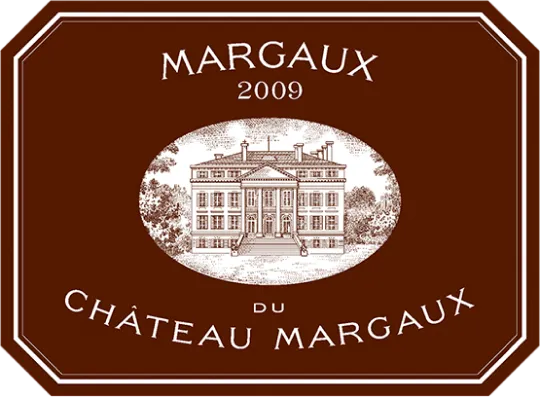
Margaux du Château Margaux 2009 was produced from a great vintage, and possesses all those attributes: a deep, dark colour, a rich and voluptuous nose, already complex with floral and spicy hints mingling with cocoa notes. The impression on the palate reflects the intensity of the aromas; it is full-flavoured, rich and impressive, structured by well-integrated tannins. The finish is soft, both warm and fresh. This wine is very powerful and concentrated and is quite remarkably open and easy to drink, which is probably due as much to the personality of the vintage as to the terroir of Château Margaux. (October 2025)
Climate
After a cold, dry winter, the weather turned rainy and cool in April, causing a rather late bud-break and a somewhat slow growth of the vine shoots. As from May 1st however, temperatures rose quite sharply and settled above the seasonal norms, without ever reaching excessive highs. This allowed a quick and successful flowering that promised a very even ripening of the berries.
By then a drought had begun to set in, though in these early days we had no idea of how severe and long it would actually be. Very few vintages (apart from the 2005) have been so dry. It hardly rained from July 10th until the end of the harvest on October 14th!
Such dry weather is particularly beneficial to the great terroirs which can regulate the water supply to the vines, and also to Cabernet Sauvignon because it is less affected by drought than Merlot. Still, some of the vines planted in lighter and less clayey soils struggled to get their grapes perfectly ripe.
While these very dry months had some very hot days, the nights remained rather cool. This contrast helped the tannins and anthocyanins to concentrate in the skins of the red. All the pieces were gradually falling into place to make 2009 a really outstanding vintage. (The picking began September 24th).
Through the vintages
Rediscover Margaux du Château Margaux through its vintages
Select your year
Margaux du Château Margaux
2019
We have decided to release Margaux du Château Margaux 2019 starting in spring 2025, as this wine, during a team tasting, displayed such immediate charm that it won us all over.
The bouquet, floral, fruity, and subtly spiced, is already expressive and complex, with perfectly integrated oak.
On the palate, the texture is smooth and silky, with such well-rounded tannins that one almost forgets the concentration typical of this great vintage.
The finish is long and aromatic, reflecting the wine’s overall character: all finesse and delicacy.
It certainly has a brilliant future, but it is already hard to resist today... (October 2025)
60% cabernet sauvignon, 38% merlot, 1% cabernet franc, 1% petit verdot
Climate
Globally, 2019 was the warmest year on record. In France, the average temperature was 13.7°C, 1.1°C to 1.2°C higher than usual.
In Margaux, the winter of 2019 was mild at 1 to 2 degrees above the 30-year averages, with limited rain (30 mm less than the 30-year averages) and only three days of frost. Under these conditions, the date of bud-break ranged from March 29th to April 4th.
Spring was mild and temperatures were near-normal for the season, with abundant rainfall at the end of April and again between June 5th and June 18th. Flowering occurred between the 1st and the 9th of June and went relatively well. Only some older parcels of Merlot showed some signs of coulure. The rain, which risked causing occasional outbreaks of mildew, had no sanitary impact and the vineyards remained in a very good state throughout the year.
The summer stood in sharp contrast to the rainy spring. Anticyclonic conditions prevailed and only 64 mm of rain fell between June 21st and September 21st. However, the summer of 2019 will be best remembered for two heatwaves at the end of June and then from July 22nd to 24th when the temperature reached 39.9°C in Margaux!
The red grape harvest began on September 18th in ideal conditions, and the Merlot grapes were perfectly ripe and concentrated when picked. A weather disturbance between September 22nd and the 29th did not affect the health of the grapes and allowed them to ripen more slowly under conditions that were less aggressive for the vines, better preserving the acidity levels, with ultimately not too high levels of alcohol. The grapes picked between the end of September and the beginning of October benefited from the concentration developed after veraison (August 5th to the 10th), without being significantly affected by low slight dilution from the rain.
The harvest ended on October the 10th.
Margaux du Château Margaux
2018
We decided to release the 2018 Margaux du Château Margaux as early as autumn 2024, as it is exceptionally opulent, generous on the palate, and already highly approachable.
From the first impression on the nose, we're seduced by its fragrance of ripe, spicy red fruits, with the oak already perfectly integrated. Then on the palate, the wine has an impressive, silky and unctuous texture.
The quality of the tannins is remarkable, as is the length on the palate, being both soft and quite fresh, despite the summer’s high temperatures.
In the end, the only disappointment is the low volume produced, given the limited yields and drastic selection during blending. In fact, over 20% of the production was downgraded into a fourth selection, sold in bulk. (October 2025)
83% cabernet sauvignon, 15% merlot, 2% petit verdot
Climate
The warmest year since the beginning of the 20th century, temperatures in 2018 were 3.24°F above the national average. In Margaux, the year began with a relatively mild winter with below-normal temperatures and occasional frosts in February which had no impact on our vines. The rest of the year was hot, sometimes very hot, compared with seasonal averages, marked by record-breaking temperatures in the last ten days of June and the first ten days of August, more than 7.2°F above the 30-year average.
Rainfall in the first half of the year was heavy with nearly 25 inches in Margaux between January 1st and July 10th, making growing conditions challenging. Each rainy day made a good vintage less likely. But dry and warm summer conditions eventually reached our region and remained until the end of the harvest. Rainfall was very low between mid-July and late September at 2 inches. This rainfall pattern is reminiscent of 2009.
Under these conditions, budbreak was relatively late between the 4th and the 10th of April. The vines flowered between the 25th and the 28th of May and, despite fairly poor conditions, we did not note, even in the relatively sensitive Merlot plots, poor or failed fruit-set. The greatest challenge was mildew which this year led to slightly lower yields than hoped for after the fruit-set.
The white grapes were harvested the week of August 27th. The red harvest took place from September 17th to October13th in ideal conditions. Again this year, we were able to choose the best time to harvest our grapes – no Botrytis symptoms, mild weather, ripening conditions sufficiently spread between the earliest Merlots and latest Cabernets – and we had time to take the necessary care with each wine-making vat. Nearly a hundred different batches were converted into wine this year, demonstrating our continued efforts for better and more precise selections.
Margaux du Château Margaux
2017
In 2023 we have decided to start selling the Margaux du Château Margaux 2017. This is a delicious, charming wine that today is more ready to drink than the 2016 vintage.
This wine is best described by its softness, freshness and balance. The nose offers notes of flowers and red fruit, and on the palate, the wine is both concentrated and silky, with a lovely richness that balances the tannic structure. This wine is a pleasure to drink now, even though it is still very young and clearly destined for a bright future. (October 2025)
Climate
After a relatively dry 2016, the first months of 2017 brought the necessary precipitation to keep the water table balanced. Winter temperatures weren’t particularly cold. The vines budded around April 4th, but we weren’t wary enough of the spring-like temperatures and a frost on the nights of April 27th and 28th served as a reminder that, above all, winegrowers are dependent on nature. The choice location of our vineyard plots allowed us to limit frost damage: only 10% of our red vines were affected.
In the whole growth cycle, only the last week of June saw heavy rainfall. The vines had already flowered between May 25th and 30th in the most favorable conditions for efficient, homogeneous pollination. Summer 2017 more or less resembled summer 2016: warm and very dry through July and August. Light rainfall in early September was the only thing that disrupted a rare opportunity to produce a third great vintage after 2015 and 2016; we had just harvested our white grapes when heavy precipitation dashed our hopes of a truly standout year.
We then had to make a crucial decision: to harvest quickly grapes that were not yet ripe enough for fear that Botrytis would ruin them, or wait for the sun’s return and harvest riper, more concentrated grapes later in September. In keeping with our high standards of quality and reassured by optimistic weather forecasts, we chose the latter and harvested the reds between September 12th and October 3rd in exceptionally fine weather conditions.
Margaux du Château Margaux
2015
Margaux du Château Margaux 2015 is the result of the most rigorous selection ever made on our 3rd wine: indeed, almost a quarter of the production was relegated to a 4th wine sold in bulk.
Thanks to this rigorous selection, we may well have today the most charming and open Margaux du Château Margaux we have ever produced.
The already expressive nose is delicately smoky with floral and red fruit notes, and precedes a silky palate full of freshness, elegance and delicacy.
This wine is so delicious that it would be easy to overlook the concentration of this great vintage! Above all, the wine expresses remarkable length and has a tannic richness that is eclipsed only by its smoothness. It is already difficult to resist today, even though we know it will continue to improve in the years ahead. (October 2025)
Climate
Winter, which was appreciably colder than those of the previous years, caused late, but perfectly regular blossoming. Dry and sunny weather in the spring made for optimal conditions, so flowering took place very quickly and homogenously. This hot, dry weather persisted throughout the months of June and July, to a point where we were afraid there could be water stress, at least in the most sensitive plots. Fortunately a little rain in August arrived just in time to ensure a quick and regular colour-change. The drought, which arrived again in September, together with very warm days and cool nights, enabled the grapes to balance their richness in sugar with good acidity, to render their tannins more silky and to make their aromatic potential more complex.
The harvest of the reds took place from September 18th to October 6th. The small size of the grapes and their thicker skins indicated a very high concentration of tannins. The 2015 weather conditions are, in fact, the feature of very great vintages, like 2005, 2009 and 2010.
Margaux du Château Margaux
2014
Margaux du Château Margaux 2014 has benefited enormously from the outstanding selection made for this vintage. The Pavillon Rouge and Château Margaux blends make up just 60% of the harvest in 2014 which allowed the Margaux du Château Margaux to be enhanced by plots previously used for Pavillon Rouge. The result is one of the finest vintages of this wine to date, composed in equal parts of cabernet sauvignon (49%), and merlot (49%) with a small percentage of petit verdot.
This wine has an immediate freshness, charm and elegance on the palate. The delicate, floral and fruity nose gives way to a gentle and smooth mouthfeel and finishes on a tighter note—a reminder that this is a concentrated wine with a bright future ahead of it. To be enjoyed without rushing. (October 2025)
Climate
After a very wet and mild winter, without any significant cold spells, spring was « normal »: May was rather cool and June was quite warm, so flowering happened on the usual dates, and under very favourable conditions; it was therefore very quick and homogenous, contrary to the previous year.
July didn’t bring us any great surprises, but August was particularly cool, without doubt one of the coldest we have seen in recent times. These low temperatures made it difficult for the grapes to change colour, which took a long time. Fortunately it didn’t rain much, but in neither July nor August did we have a really dry spell. As it often happens in Bordeaux, at the end of August anything was still possible; a prospect of a good vintage as well as of a mediocre one… The really fine sunny weather of September brought us exactly what we were hoping for: the heat and drought enabled the grapes to ripen perfectly, and the harvest to take place under ideal conditions. The complete opposite to what happened in 2013… The white harvest took place from the 15th to the 19th of September, and the red harvest from the 29th of September to the 10th of October.
Margaux du Château Margaux
2013
While it is relatively easy, on a great terroir and in a fine vintage, to produce an excellent third wine, the exercise becomes more delicate in certain years when not all plots reach full maturity.
How then, in a vintage such as 2013, can we maintain our commitment to excellence? Indeed, some late plots of cabernet or merlot, affected by “millerandage”, a condition that produces very small berries, have not always met our expectations.
With this objective in mind, we carried out the blends of the vintage. We decided to set aside some very fine lots of Pavillon Rouge, which went to “support” the Margaux du Château Margaux, while nearly a quarter of the production was downgraded to a fourth selection. We thought that the Margaux du Château Margaux would be blended from these downgraded lots, when in fact it is completely composed of wines that used to go into the Pavillon Rouge, which left the quantity sold in bulk unchanged.
Therefore Margaux du Château Margaux 2013 benefits from the extreme selection carried out on the Pavillon Rouge (which only represents 21% of the harvest), and from the removal of the least successful plots (all of which went into the fourth selection sold in bulk).
The merlot makes up only 12% of the blend, putting the emphasis on the cabernet sauvignon which was the main success of the vintage (88% of the whole).
It is just like all the best wines of the vintage, fresh, perfumed, very soft on the palate, and with no hint of harshness or aggression. It is a charming wine that appeals to delicate foods and although it does not have the same ageing potential as the other vintages, will nevertheless offer immediate pleasure to those who taste it. It is perfect for drinking today. (Octobre 2025)
Climate
The particularly cool temperatures at the end of winter and into spring delayed the shooting and then the flowering by a good ten days compared to the average. And as it also rained a lot during this period, the flowering was slow and the formation of the grapes difficult which caused a generalised “millerandage” and a bad problem of “coulure” - falling of underdeveloped fruit - in the Merlots. This latter phenomenon turned out to be more moderate for the Cabernets. Straightaway, we knew that the 2013 vintage wouldn’t be plentiful…
Fortunately, the summer drought enabled the grapes to catch up some of their lateness: at the moment of changing colour, we didn’t find the same heterogeneity as at the moment of flowering. It is also possible that their low quantity accentuated the catching up. At the beginning of September hope was growing for a harvest, certainly small, but that seemed to be ripening under excellent conditions.
September was paradoxical, relatively dry, but damp at the same time. Frequent small bursts of rain, in fact, maintained a raised ambient humidity without causing too much precipitation. So there was everything to play for until the end of the month when a sudden development of Botrytis led us to a quick start of the harvest ; in the end, the grapes would lose just a few days’ ripening, enough to dash the hopes of a great vintage, not enough to take away all its promises.
The harvest of the whites took place from the 19th to the 27th of September, and that of the reds, from the 30th of September to the 11th of October.
Margaux du Château Margaux
2012
Margaux du Château Margaux 2012 is a very dense wine that blossoms after a few moments, revealing complex aromas of spice, black fruit and flowers. After this very pure nose, it is fresh and smooth on the palate, with balance and finesse. Although the tightly-knit tannins are present, their silkiness is so remarkable that they go unnoticed, even in such a young wine. It does not have the depth and complexity of the Pavillon Rouge, but this wine is no less a reflection of our terroir, which has the ability to produce wines that combine softness and power, freshness and maturity; wines that are delicious to drink young, but that can be kept for several decades. It can be enjoyed now, with no rush. (October 2025)
Climate
2012 marked the return of a great climatic classicism: a cold winter, especially in February, followed by a very wet spring, then a very dry summer before a return to rainy weather as from September 20th.
The heavy rain which lasted until July 15th, created very favourable conditions for the development of mildew. However this year we intensified our organic programme with great success: not only have we not used any insecticide on the estate for 10 years, but in 2012 we only used one chemical treatment, as opposed to the usual 7 or 8 on the great wine plots. We’re almost there…
From July 15th onwards, the weather was dry and moderately warm but punctuated by a few very hot days. Such conditions are typical of great Bordeaux classic vintages: they allow for the simultaneous ripening and concentration of the grapes. Only the less good terroirs and young vines suffered from the sudden transition from a very wet spring to a very dry summer.
The weather changed again from the first day of autumn: the moderate rains, which fell regularly from September 20th onwards, arrived too late to greatly upset the ripening or health of the grapes, but probably prevented, by a few days, 2012 from being the great vintage it should have been.
The harvest of the whites took place between the 10th and the 14th September, while the harvest of the reds was carried out between the 25th September and the 16th October, just before the weather really deteriorated...
Margaux du Château Margaux
2011
This vintage benefited from ideal weather conditions. Consequently, the vast majority of our vines reached perfect ripeness, resulting not only in an excellent Grand Vin and Pavillon Rouge but also in a very fine Margaux du Château Margaux.
These wines are the fruit of a rigorous selection process. Indeed, all grapes from the youngest vines, which suffered considerably from the summer drought, were downgraded to a fourth selection sold in bulk.
This wine is remarkably concentrated—one of the benefits of the prolonged drought—and needed time for its imposing tannic structure to round out and soften.
With a lovely ruby colour, this wine is imbued with harmonious oak notes and is floral and fruity on the nose. Composed almost equally of cabernet sauvignon (55%) and merlot (45%), it is dense, powerful and lingering on the palate, yet unfailingly balanced, thanks to its remarkable freshness. It is delicious today, even if it will continue to improve over the next few years. (October 2025)
Climate
The wine-growing year started with a virtually summery climate, the months of April and May being a lot hotter and drier than normal. The start-up and growth of the vines was, therefore, very quick and flowering was particularly early. Following that, the months of June, July and August were rather cool, but not wet enough, especially at Margaux, to really change the drought status of the vineyard, a characteristic of the vintage. The 26th and 27th of June were hotter than we had ever seen: numerous bunches of grapes, ready to ripen, taking into account the precocity of the vintage, were subjected to intense heat which caused some damage, particularly in the not very vigorous cabernet sauvignon parcels. The dryness of the vineyard after three months of drought probably amplified this phenomenon, of which the consequences remain generally limited. The harvest, which started on the 25th August for the whites, and the 5th September for the reds, benefited from generally hot and dry weather, which allowed plenty of time for the various sorting operations made necessary by the problems of intense heat. Our only disappointment is the quantity: with a yield of 29hl/ha, the 2011 vintage is the smallest harvest for 20 years!
Margaux du Château Margaux
2010
Amazing 2010! We thought we had reached the summit in 2009, and here it is, equalled in 2010. Moreover, Margaux du Château Margaux benefited from a selection that was unknown in 2009: the less successful lots were put together into a fourth wine sold in bulk.
This Margaux du Château Margaux is a true reflection of the extraordinary quality of the 2010 vintage: complex and deep on the nose, very pure, particularly subtle; on the palate, it is dense, rich, tight, very long and fine. The finish is at once soft, fresh and very aromatic. This wine is already very pleasant to drink but far from having reached its peak. (February 2025)
Climate
Winter was quite cold and dry, causing some delay in the budding. Mixed weather conditions in the spring made the flowering process uneven and caused a little coulure in some of the older Merlot plots. Yet, as always, the great terroirs appear to have set their own agenda and ignored the vagaries of the weather, enjoying a fast and homogenous flowering process with perfect results. Then again, the Cabernet Sauvignon, which is so well suited to these lands, is not very prone to coulure.
From the end of June until the last grapes were harvested in October, we experienced, once again, the type of drought typical of great Bordeaux vintages. Indeed, while on the one hand, the vines were spared any excess of water, thereby preventing unwanted foliage, they benefited from just enough moisture to favour ripening as well as enhance concentration in the grapes.
While the 2010 weather conditions were reminiscent of 2009 and 2005, vintages are never completely alike. The summer of 2010 was as dry as 2009, yet cooler. The absence of extreme heat combined with cool nights compensated for the drought and probably allowed some of the great terroirs’ young plants to reach a new quality threshold. It also favoured the aromatic character in all grape varieties, particularly in Sauvignon Blanc and Cabernet and enabled the maintenance of excellent acidity levels – the perfect foil for high levels of alcohol. (The picking began on 22nd September)
Margaux du Château Margaux
2009
Margaux du Château Margaux 2009 was produced from a great vintage, and possesses all those attributes: a deep, dark colour, a rich and voluptuous nose, already complex with floral and spicy hints mingling with cocoa notes. The impression on the palate reflects the intensity of the aromas; it is full-flavoured, rich and impressive, structured by well-integrated tannins. The finish is soft, both warm and fresh. This wine is very powerful and concentrated and is quite remarkably open and easy to drink, which is probably due as much to the personality of the vintage as to the terroir of Château Margaux. (October 2025)
Climate
After a cold, dry winter, the weather turned rainy and cool in April, causing a rather late bud-break and a somewhat slow growth of the vine shoots. As from May 1st however, temperatures rose quite sharply and settled above the seasonal norms, without ever reaching excessive highs. This allowed a quick and successful flowering that promised a very even ripening of the berries.
By then a drought had begun to set in, though in these early days we had no idea of how severe and long it would actually be. Very few vintages (apart from the 2005) have been so dry. It hardly rained from July 10th until the end of the harvest on October 14th!
Such dry weather is particularly beneficial to the great terroirs which can regulate the water supply to the vines, and also to Cabernet Sauvignon because it is less affected by drought than Merlot. Still, some of the vines planted in lighter and less clayey soils struggled to get their grapes perfectly ripe.
While these very dry months had some very hot days, the nights remained rather cool. This contrast helped the tannins and anthocyanins to concentrate in the skins of the red. All the pieces were gradually falling into place to make 2009 a really outstanding vintage. (The picking began September 24th).
Service & tasting
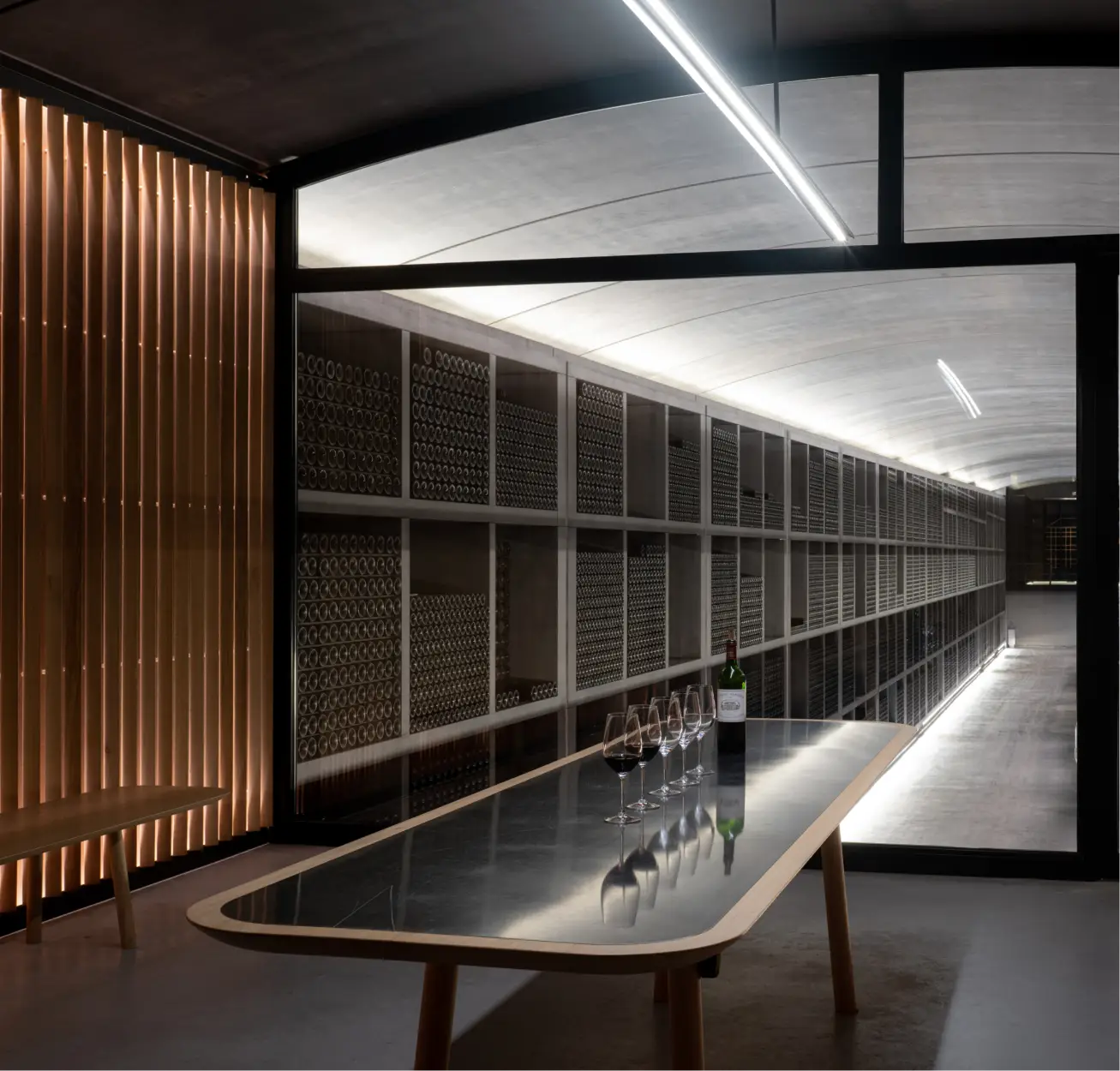
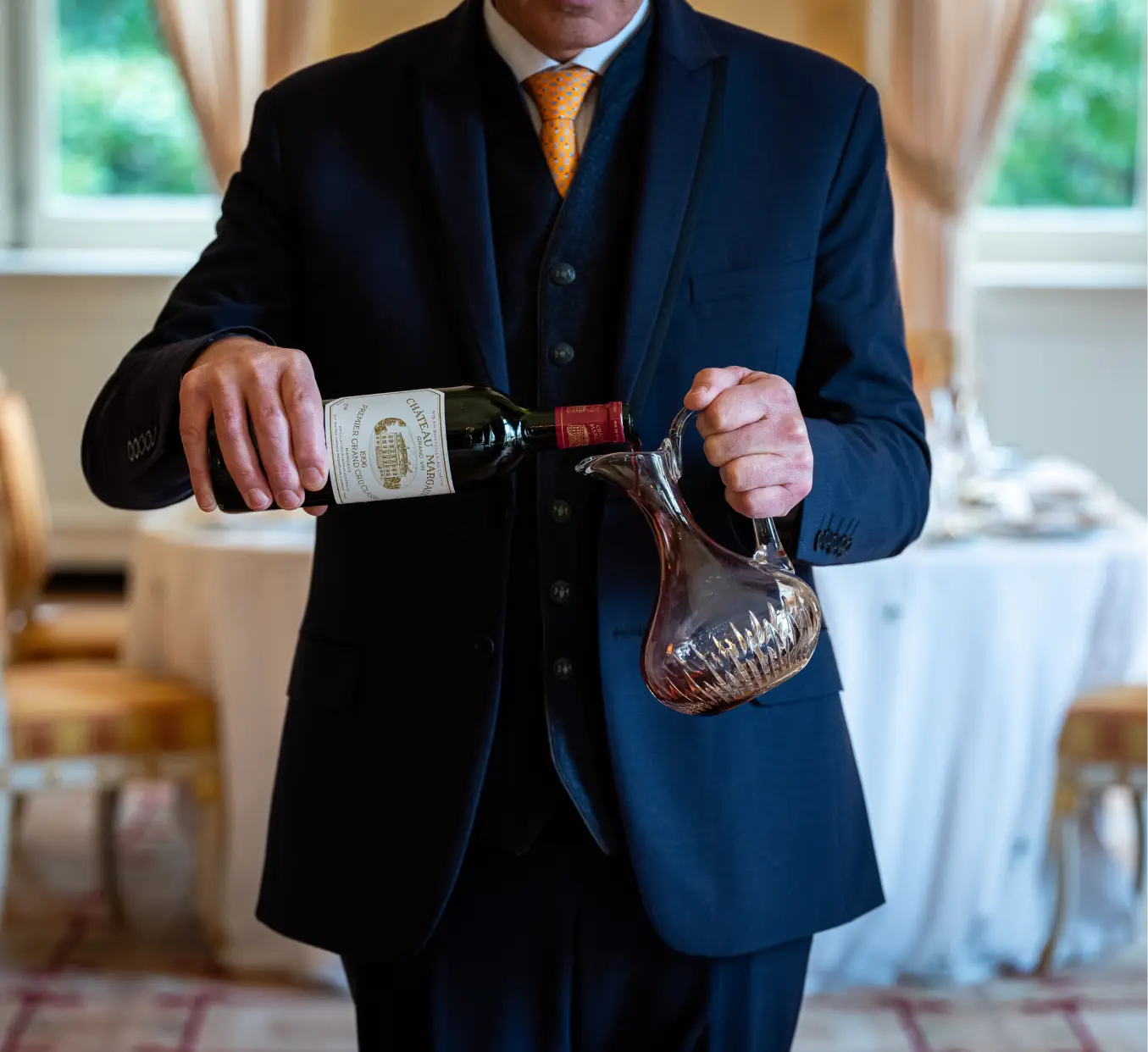
Discover our tips for serving and tasting your wine in the best conditions.
Service & tasting
Discover our tips for serving and tasting your wine in the best conditions.